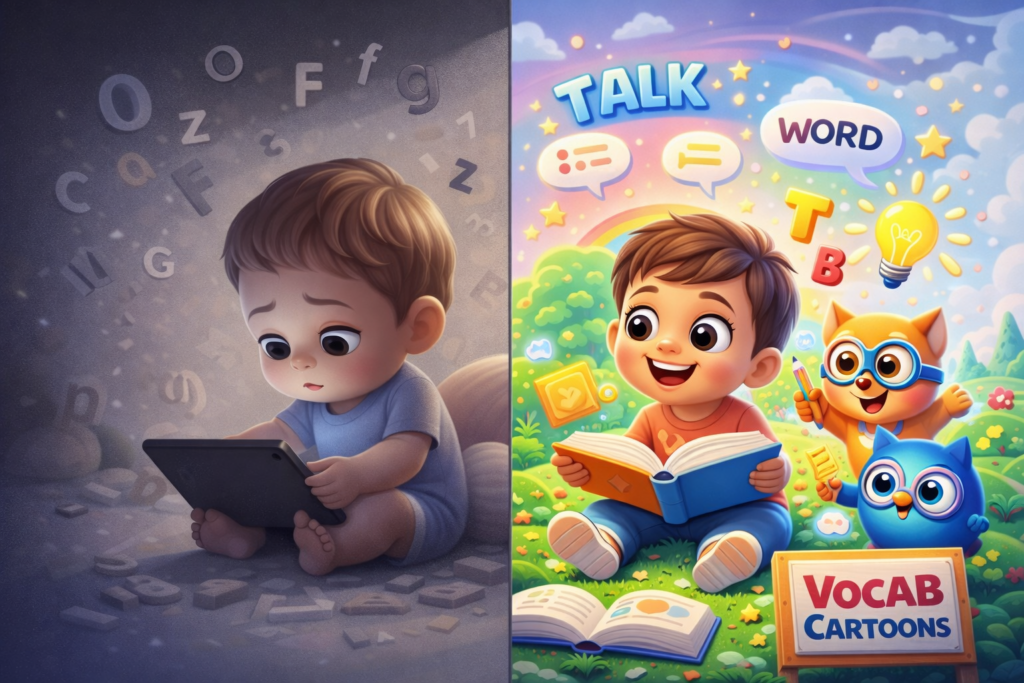
A recent UK government-linked study has highlighted a worrying trend: toddlers who spend more time in front of screens tend to have smaller vocabularies and may find conversations and learning harder compared with peers who have less screen exposure.
Researchers found that two-year-olds with the highest screen use — roughly five hours a day could speak significantly fewer words than children with more limited screen exposure. This has prompted officials to prepare the first official guidance for parents on managing screen time for children under five.
Why Screen Time Matters for Language Development
Screen time isn’t just about entertainment it can influence how children learn language during their fastest phase of brain development. Here’s what the latest research suggests:
- Toddlers who spend long hours on devices may miss out on crucial talk, play, and reading interactions with caregivers — the very activities that help build vocabulary.
- Average screen use among two-year-olds in the research was more than two hours a day, well above the World Health Organization’s recommendation of no more than 1 hour for ages 2–4.
- Too much screen time can displace language-rich interactions — like chatting with parents, exploring new words, and engaging in imaginative play.
While screens are now a part of modern family life, child development experts stress that quality interactions beat passive watching especially during the early years.
What Experts Recommend
Education and health authorities are encouraging parents to:
- Limit passive screen time and instead prioritize shared reading, talking, and play.
- Use digital tools thoughtfully — ideally in ways that encourage interaction rather than just passive viewing.
- Embrace activities that naturally grow vocabulary and communication skills, such as storytelling, singing, and everyday conversations.
This is where VocabCartoons can make a positive difference.
How VocabCartoons Helps Boost Vocabulary — Screen Time You Can Feel Good About
At VocabCartoons, we believe screen time doesn’t have to be a “vocabulary thief” — if it’s done right. Our animated vocabulary videos pair fun characters with context-rich language learning that helps children absorb new words through stories and visuals, not just passive viewing.
Here’s why parents and educators love VocabCartoons:
Engaging animations that spark curiosity
Every episode introduces new vocabulary with context and meaning
Designed to support conversation between kids and caregivers
Perfect for short, purposeful learning bursts
Instead of unlimited screen time with random videos, VocabCartoons offers playful learning moments that can complement real-world interaction — the very interactions experts say are critical for toddlers’ language growth.
While screens are now embedded in everyday life, research shows that excessive screen time — especially passive viewing may limit toddlers’ vocabulary growth.
But with mindful use and tools like VocabCartoons that support active learning, technology can still be part of a toddler’s journey to stronger language skills. Encourage interaction, keep screen time purposeful — and let learning be both fun and effective.
Ready to give your child a vocabulary boost? Explore VocabCartoons today!