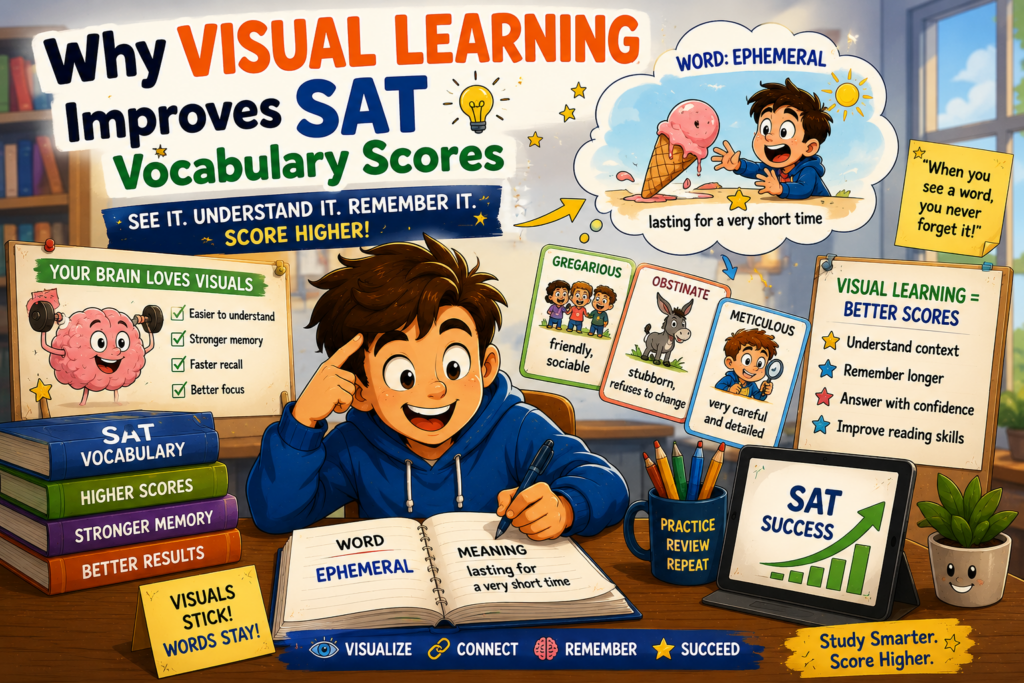
Many SAT students struggle with vocabulary not because the words are too difficult, but because the study methods are ineffective.
Traditional vocabulary learning often relies on:
- memorising long word lists
- repetitive definitions
- passive reading
Unfortunately, the brain quickly forgets information that feels:
- abstract
- repetitive
- emotionally empty
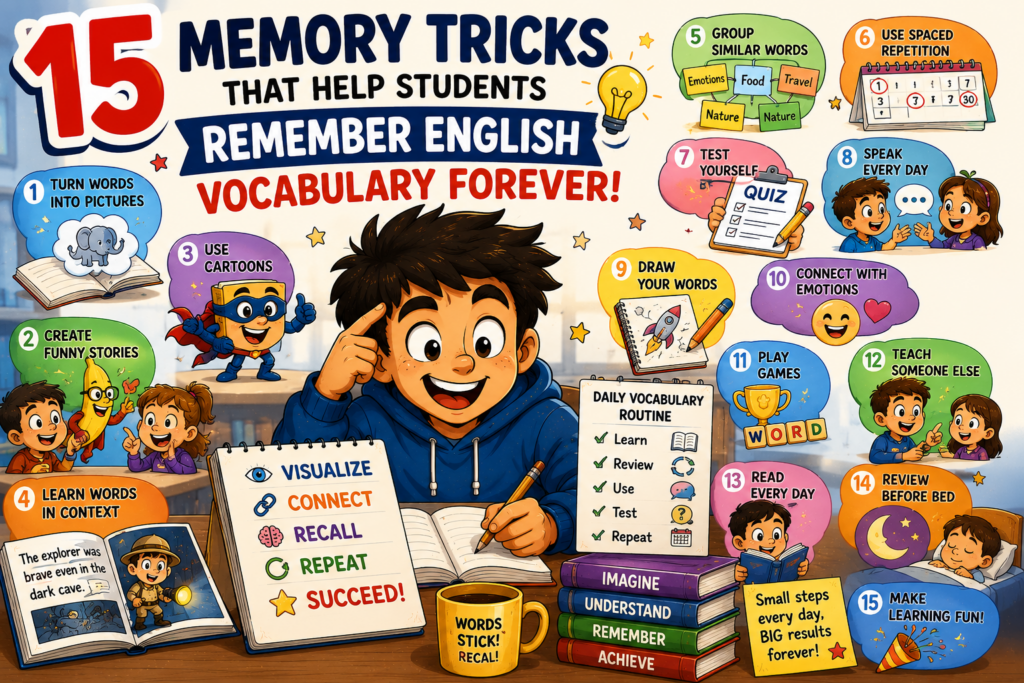
That is why visual learning has become one of the most effective ways to improve SAT vocabulary scores.
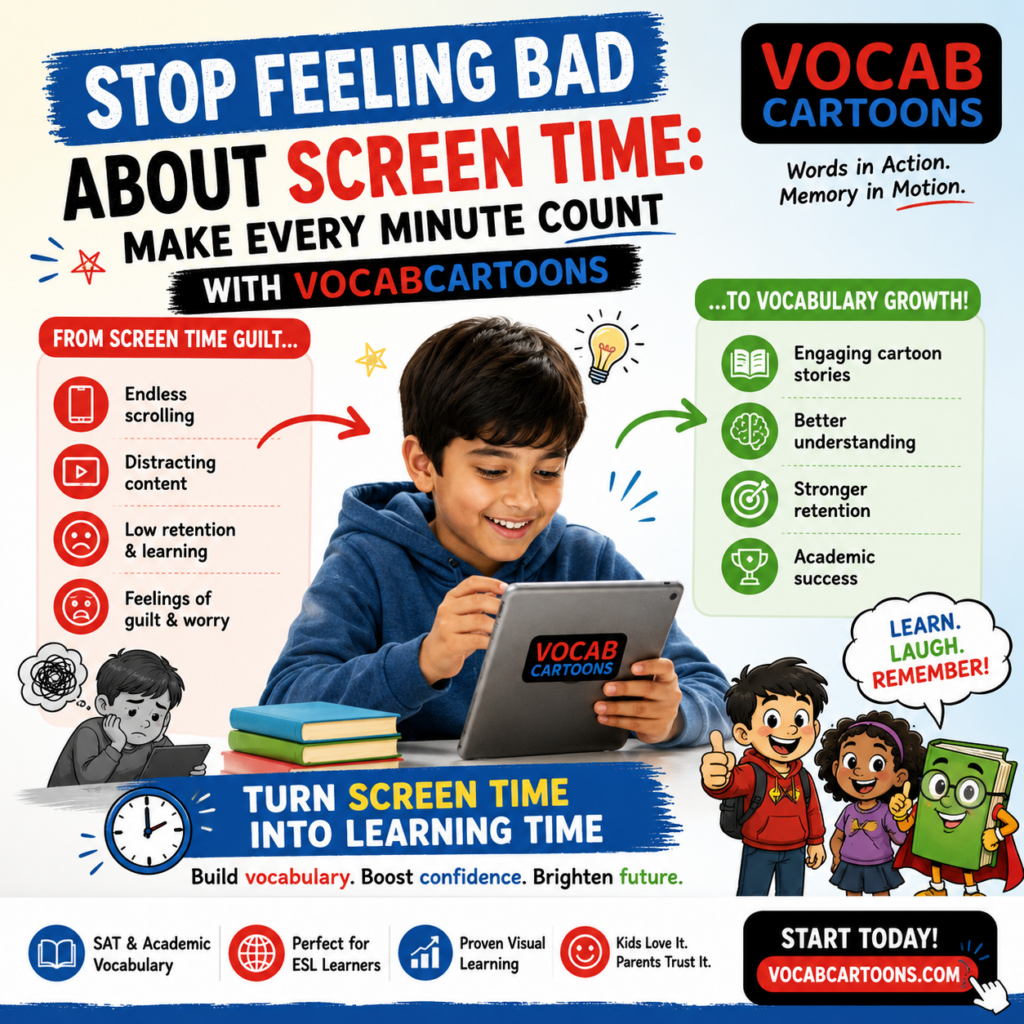
At VocabCartoons, we use cartoons, storytelling, humour, and visual memory techniques to help students remember vocabulary faster and retain it longer.
Visual learning is the process of understanding and remembering information through:
- images
- diagrams
- colours
- storytelling
- visual patterns
Instead of only reading a definition, students connect vocabulary to memorable visual scenes.
This creates stronger memory pathways in the brain.
Why the Brain Remembers Visuals Better
The human brain processes images far faster than plain text.
Research consistently shows that people remember:
- pictures
- emotional scenes
- funny situations
- visual stories
more effectively than isolated words alone.
This is often called:
The Picture Superiority Effect
Simply put:
visuals stick in memory longer than text.
Why SAT Vocabulary Is Difficult
Many SAT words are:
- uncommon
- abstract
- formal
- rarely used in everyday conversation
Students often forget words because definitions alone lack emotional or visual meaning.
For example:
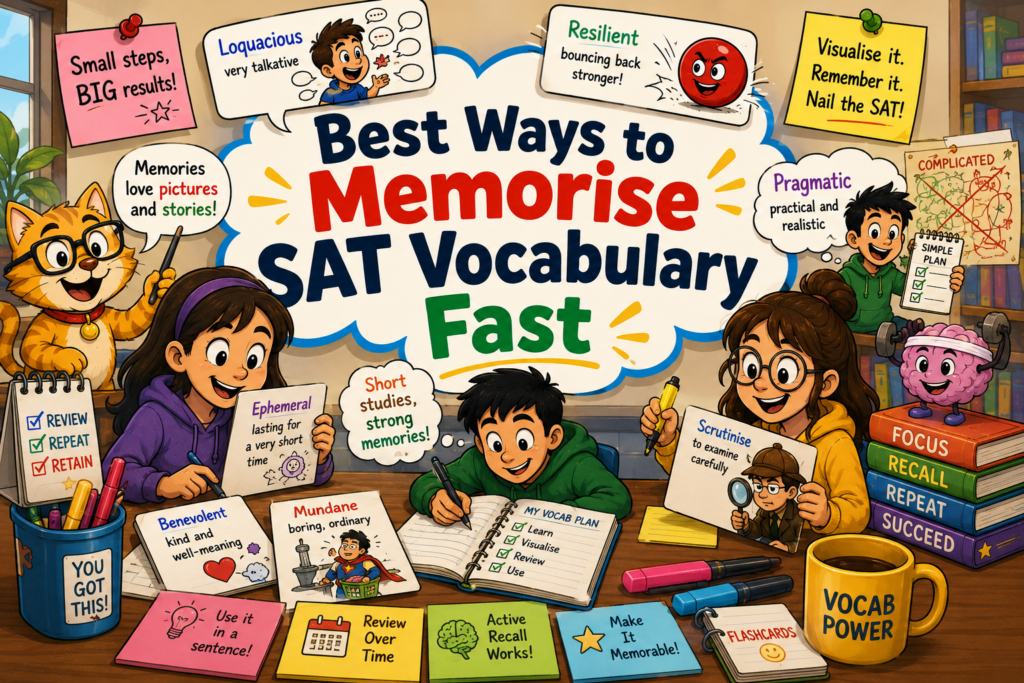
Word: Ephemeral
Definition:
lasting for a very short time
That definition feels abstract.
But imagine:
an ice cream cone melting instantly before a child can take a bite.
Suddenly the word becomes:
- visual
- emotional
- memorable
That is the power of visual learning.
How Cartoons Improve Vocabulary Retention
Cartoons combine:
- humour
- storytelling
- exaggeration
- visual memory
into a single learning experience.
This activates multiple parts of the brain at once.
Students are not just:
- reading words
They are:
- imagining scenes
- understanding emotions
- creating associations
- building long-term memory
The Science Behind Visual Vocabulary Learning
Visual learning improves:
- comprehension
- retention
- recall speed
- emotional engagement
because it creates:
stronger neural connections
When students attach vocabulary to visual stories, the brain stores information more efficiently.
Example of Visual SAT Learning
Word: Gregarious
Definition:
social and friendly
Traditional method:
- read definition
- memorise definition
- forget definition
Visual method:
Imagine:
a giant magnet student attracting smiling classmates everywhere.
That cartoon image instantly creates understanding.
Image Prompt
A happy cartoon student acting like a giant magnet attracting smiling classmates.
Visual Learning Reduces Boredom
Many students dislike vocabulary study because it feels repetitive.
Visual learning transforms vocabulary into:
- entertainment
- storytelling
- creativity
- active learning
Students become more engaged and motivated.
The more emotionally engaged students feel:
the better they remember information.
Why Humour Improves Memory
Funny images create stronger emotional reactions.
The brain naturally remembers:
- weird
- exaggerated
- humorous
- surprising
experiences more easily.
That is why cartoon vocabulary learning works so effectively.
Visual Learning Encourages Active Recall
Visual study methods naturally encourage students to:
- explain words aloud
- imagine scenarios
- create stories
- describe images
This strengthens:
active recall
which is one of the most powerful memory techniques for SAT preparation.
Visual Learning Helps Different Types of Students
Not all students learn effectively through reading alone.
Visual vocabulary learning especially helps:
- visual learners
- younger students
- ESL learners
- struggling readers
- students with attention difficulties
because images simplify difficult ideas quickly.
Storytelling Makes Vocabulary Easier
Stories give words:
- context
- emotion
- meaning
Students remember vocabulary better when words appear inside memorable situations.
Example:
Word: Obstinate
Instead of memorising:
stubborn
Imagine:
a donkey student refusing to move while classmates push the chair across the classroom.
That story becomes unforgettable.
A stubborn cartoon donkey student sitting firmly in a classroom while everyone tries to move him.
Visual Learning Improves SAT Test Performance
SAT success depends heavily on:
- reading comprehension
- contextual understanding
- fast recall
- vocabulary familiarity
Students who understand vocabulary visually often:
- recall meanings faster
- recognise contextual clues more easily
- understand passages better
- feel more confident during exams
Why VocabCartoons Works
VocabCartoons combines:
- cartoons
- visual memory
- storytelling
- humour
- educational psychology
to transform difficult SAT words into memorable experiences.
Instead of:
memorising harder
students learn:
smarter
Best Visual SAT Study Techniques
1. Cartoon Vocabulary
Turn difficult words into funny visual scenes.
2. Colour-Coded Flashcards
Use colours to group vocabulary themes.
3. Story-Based Learning
Attach words to tiny memorable stories.
4. Memory Hooks
Create exaggerated visual associations.
5. Visual Review Sessions
Review images alongside definitions regularly.
FAQ
Does visual learning really improve SAT vocabulary scores?
Yes. Visual learning improves retention, recall speed, and understanding by creating stronger memory associations.
Why are cartoons effective for vocabulary learning?
Cartoons combine humour, storytelling, and visual memory, making difficult words easier to remember.
Is visual learning useful for older students?
Absolutely. Visual memory techniques work for learners of all ages, including SAT students.
What is the fastest way to memorise SAT vocabulary?
The fastest methods include:
- visual learning
- active recall
- spaced repetition
- storytelling
- cartoon memory tricks
Conclusion
SAT vocabulary becomes easier when students stop relying on boring memorisation methods.
Visual learning helps students:
- understand words faster
- remember vocabulary longer
- enjoy studying more
- improve recall during exams
At VocabCartoons, we believe students learn best when vocabulary becomes:
- visual
- emotional
- memorable
- fun
Because when students can picture a word:
they are far more likely to remember it.