Have you ever spent hours memorising English vocabulary only to forget it the next day?
You’re not alone. Many students rely on repeating word lists or reading definitions over and over again. While this may help for a short time, it rarely leads to long-term memory.
The secret to remembering vocabulary isn’t studying harder—it’s studying smarter.
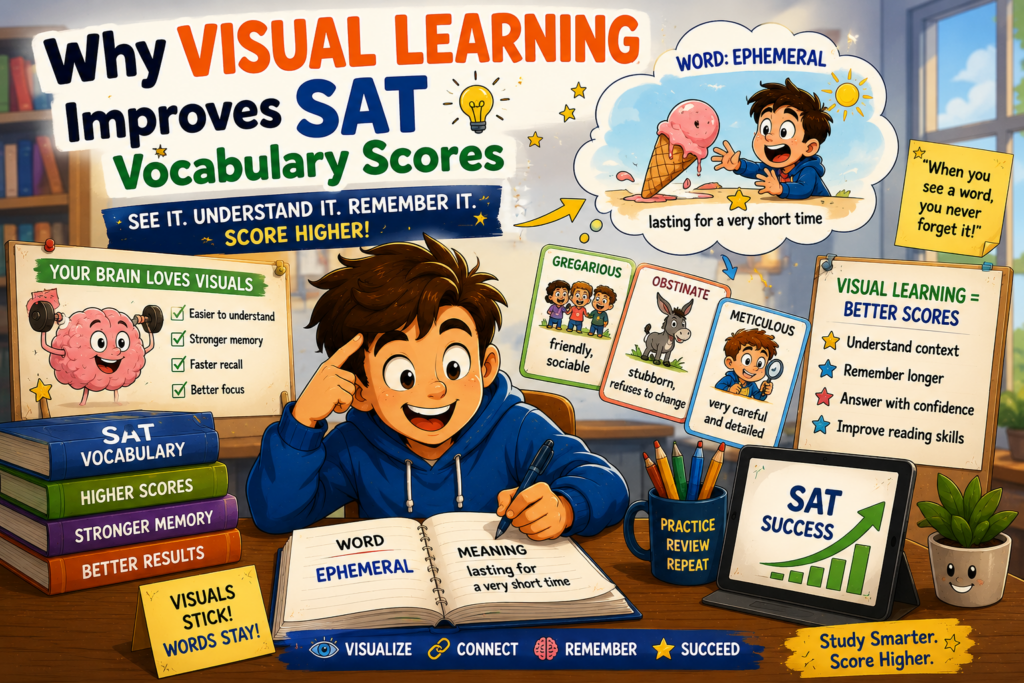
Research has shown that our brains remember information more effectively when it is connected to images, stories, emotions, and experiences. That’s why visual learning methods, like those used by VocabCartoons, help students build stronger vocabulary skills that last.
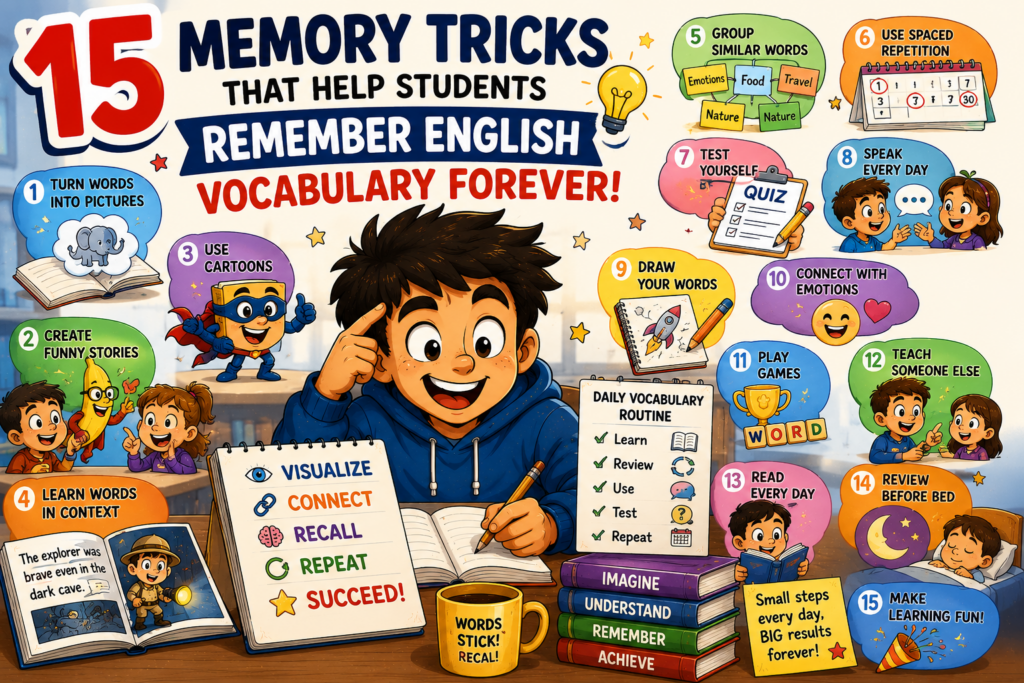
Here are 15 simple memory tricks that can help students remember English vocabulary forever.
1. Turn Every Word Into a Picture
The brain processes images much faster than text. Instead of memorising a definition, imagine a funny or unusual picture that represents the word.
For example, instead of simply learning the word enormous, imagine a giant elephant trying to fit inside a tiny classroom.
The stranger the image, the easier it is to remember.
2. Create Funny Stories
Words become more memorable when they are part of a story.
Rather than learning five unrelated words, create a short story using all of them together. Funny or ridiculous stories are even more effective because they create emotional connections.
3. Learn with Cartoons
Cartoons simplify difficult vocabulary by turning abstract ideas into memorable characters and situations.
A humorous cartoon often stays in a student’s memory far longer than a textbook definition.
This is one of the core learning methods behind VocabCartoons.
4. Learn Words in Context
Instead of memorising isolated words, learn them inside sentences.
For example:
- The weather was gloomy all day.
- She was delighted with her exam results.
Seeing vocabulary used naturally helps students understand meaning and usage.
5. Group Similar Words Together
Organising vocabulary into categories helps the brain recognise patterns.
Examples include:
- Emotions
- Food
- Nature
- School
- Travel
- Animals
- Personality
Learning related words together improves recall.
6. Use Spaced Repetition
Reviewing vocabulary over several days is much more effective than cramming everything into one study session.
Try reviewing new words:
- after one day
- after three days
- after one week
- after one month
This strengthens long-term memory.
7. Test Yourself Regularly
Instead of rereading notes, challenge yourself.
Cover the definition and try to explain the meaning from memory.
Self-testing helps the brain retrieve information, making it easier to remember during exams.
8. Speak New Words Every Day
Vocabulary becomes stronger when students actively use it.
Try using new words in conversations with friends, teachers, or family members.
The more often a word is spoken, the more natural it becomes.
9. Draw Your Own Vocabulary
You don’t need to be an artist.
Simple drawings or stick figures can help turn difficult words into memorable visual reminders.
Drawing activates different parts of the brain, making learning more effective.
10. Connect Words with Emotions
The brain remembers emotional experiences better than neutral ones.
If a vocabulary word reminds you of a happy memory, a funny moment, or an exciting event, it becomes easier to remember.
11. Play Vocabulary Games
Learning through games makes studying enjoyable.
Try:
- word matching games
- charades
- crossword puzzles
- vocabulary bingo
- classroom quizzes
- online learning games
Games increase motivation while reinforcing vocabulary.
12. Teach Someone Else
One of the best ways to remember vocabulary is to explain it to another person.
Teaching forces students to organise their thoughts and truly understand the meaning of each word.
Parents and siblings make excellent learning partners.
13. Read Every Day
Reading introduces vocabulary naturally.
Books, comics, blogs, magazines, and short stories expose students to new words in meaningful contexts.
Even reading for just 15 minutes each day can significantly improve vocabulary.
14. Review Before Bed
Studies suggest that reviewing information shortly before sleep can improve memory consolidation.
A quick 10-minute vocabulary review each evening helps reinforce learning while the brain processes information overnight.
15. Make Learning Fun
The most important memory trick is to enjoy learning.
When students laugh, imagine, create, and explore, vocabulary becomes much easier to remember.
Learning should never feel like a chore.
It should feel like an adventure.
Why Visual Learning Works So Well
Visual learning combines:
- pictures
- colours
- storytelling
- humour
- imagination
These elements activate multiple parts of the brain, helping students remember vocabulary more quickly and for much longer than traditional memorisation methods.
That is why visual learning is at the heart of VocabCartoons.
Quick Daily Vocabulary Routine
Try this simple 20-minute routine:
5 minutes: Learn 5 new words
5 minutes: Review yesterday’s words
5 minutes: Use the words in sentences
5 minutes: Test yourself without looking at the definitions
Small daily habits produce long-term results.
Frequently Asked Questions
What is the fastest way to remember English vocabulary?
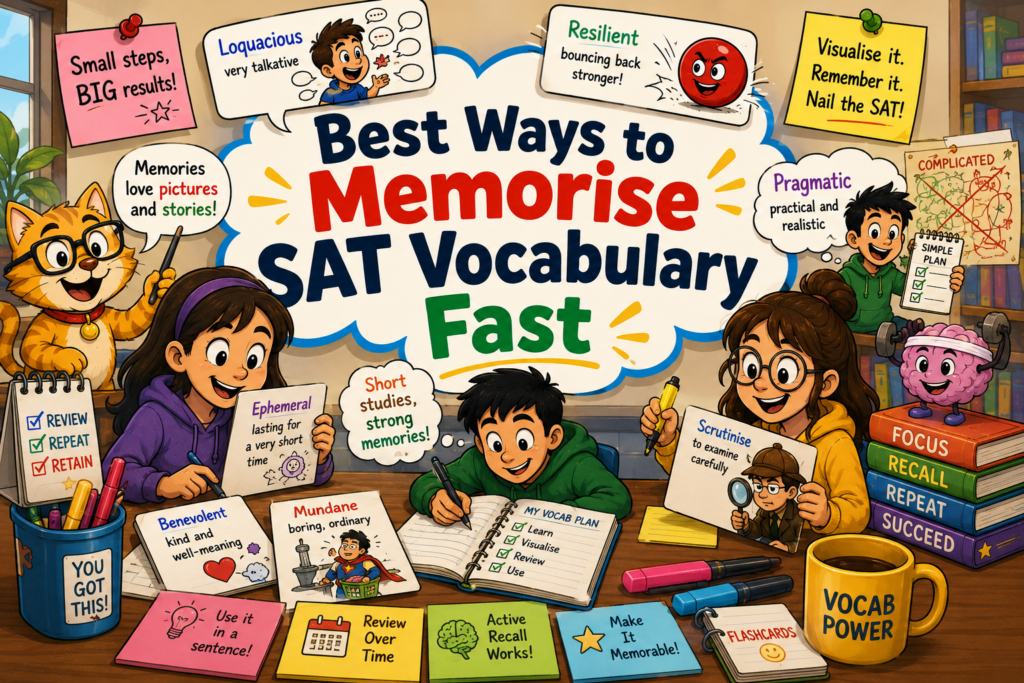
Using visual learning, storytelling, active recall, and spaced repetition helps students remember vocabulary much faster than simple memorisation.
How many new vocabulary words should students learn each day?
Most learners benefit from studying between five and ten new words each day while regularly reviewing older vocabulary.
Why do visual memory tricks work?
Pictures, cartoons, and stories create stronger memory connections, making vocabulary easier to understand and recall.
Are cartoons really effective for vocabulary learning?
Yes. Visual storytelling makes difficult words easier to understand, increases engagement, and helps students remember vocabulary for much longer.
Conclusion
Remembering English vocabulary doesn’t have to be difficult.
By using visual learning, storytelling, games, cartoons, and daily practice, students can build a stronger vocabulary while enjoying the learning process.
At VocabCartoons, we believe every new word should come with a memorable story and a visual experience that makes learning exciting.
Because when students enjoy learning, they remember more.